How to Write Email Subject Lines That Get Opened
The subject line is the only part of your email most people will read. Here's how to write it right.
 Ray Lee··3 min read
You've just spent two hours writing the most useful email of your life.
Well, if the subject line is weak, nobody will know.
The subject is the gate. Everything else is what's behind it.
Most people get this backwards. They spend a day on the body and ten minutes on the subject. Then they wonder why the open rate stalls at 2%.
Spend Hours on the Subject, Not Minutes
If the email gets clicked, you're halfway to whatever you wanted: a reply, a sale, a signup. If it doesn't get clicked, nothing else in the email matters.
I've rewritten subject lines for an hour while the body sat untouched.
It feels a bit excessive, but this one line is doing more work than any other sentence you'll write.
If you only have an hour to send an email, spend forty minutes of it on the subject.
Use Their Name (Or Something Only They Would Notice)
Personalization is the cheapest open-rate lift. Adding a first name raises open rates by around 14% in studies, and the number tends to go up for cold outreach.
"Hi Sarah, quick question about Acme" lands very differently from "Hey there".
Doing this by hand across 500 emails is misery. Fortunately, most email marketing tools will automate this for you. If you're not sure which one fits your case, here's a rundown of the popular picks.
Keep It Short
Aim for 6 to 10 words, and 35 to 40 characters or fewer on mobile.
Half of all email opens happen on a phone. If your subject runs longer than 40 characters, the inbox preview chops it. Your carefully chosen ending becomes "...".
Compare:
- Bad: "Our brand new Q3 product update with full release notes inside"
- Good: "Q3 update: 3 things that actually shipped"
Shorter forces you to pick the most important word. That's the point.
Pick One Lever: Curiosity, Numbers, Emotion, or Value
Good subject lines pull on one of four levers. Pick one. Don't try to cram all four into eight words.
- Curiosity gap: "The one onboarding step we kept getting wrong"
- Numbers: "I cut my churn 31% in three weeks"
- Emotion: "Stop wasting time on video editing" (this one actually drove sales for me, not just opens)
- Clear value: "A 5-minute tweak that doubled my open rate"
The emotional one is my own case. It worked because it named a frustration the reader was already carrying, before they even opened the email. Losing hurts.
One thing to keep in mind: pulling on emotion is not the same as faking a crisis. If the subject promises panic the body can't justify, you'll get the open once and lose the reader forever.
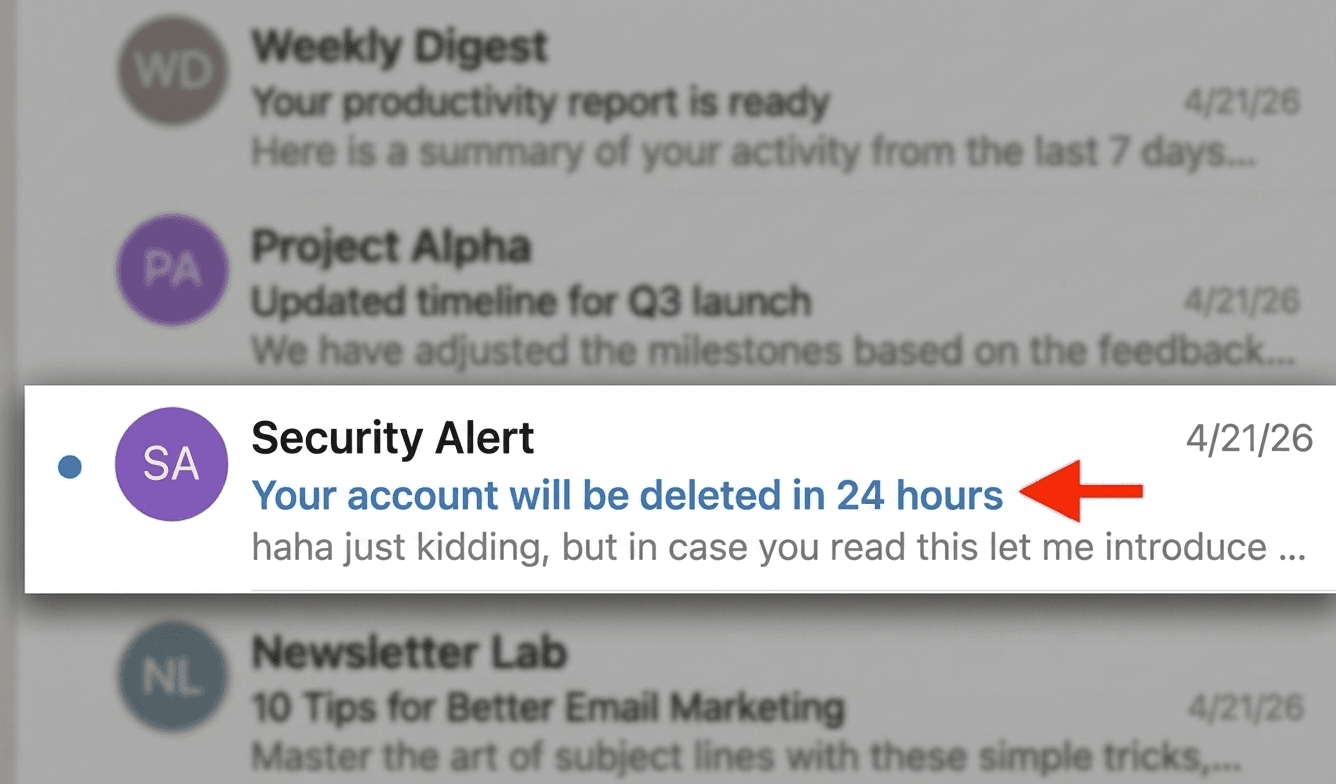
One Email, One Message
A subject line should make exactly one promise. The body should keep exactly that promise. Anything else dilutes the click.
If you have three things to say, send three emails. Or pick the most important one and save the rest for next week.
This also makes A/B testing useful. Change one subject line, see the open rate move, and pick the winner. Now you've actually learned something.
The subject line is the only part of the email guaranteed to be read. Spend the time on it. Write five versions. Throw four away.
The good ones aren't lucky. They're the 17th draft.

Builder of sendbulk.email. Making email marketing simple and free.